 Request A Quote
 Let's Talk
 Mail Us
 WhatsApp
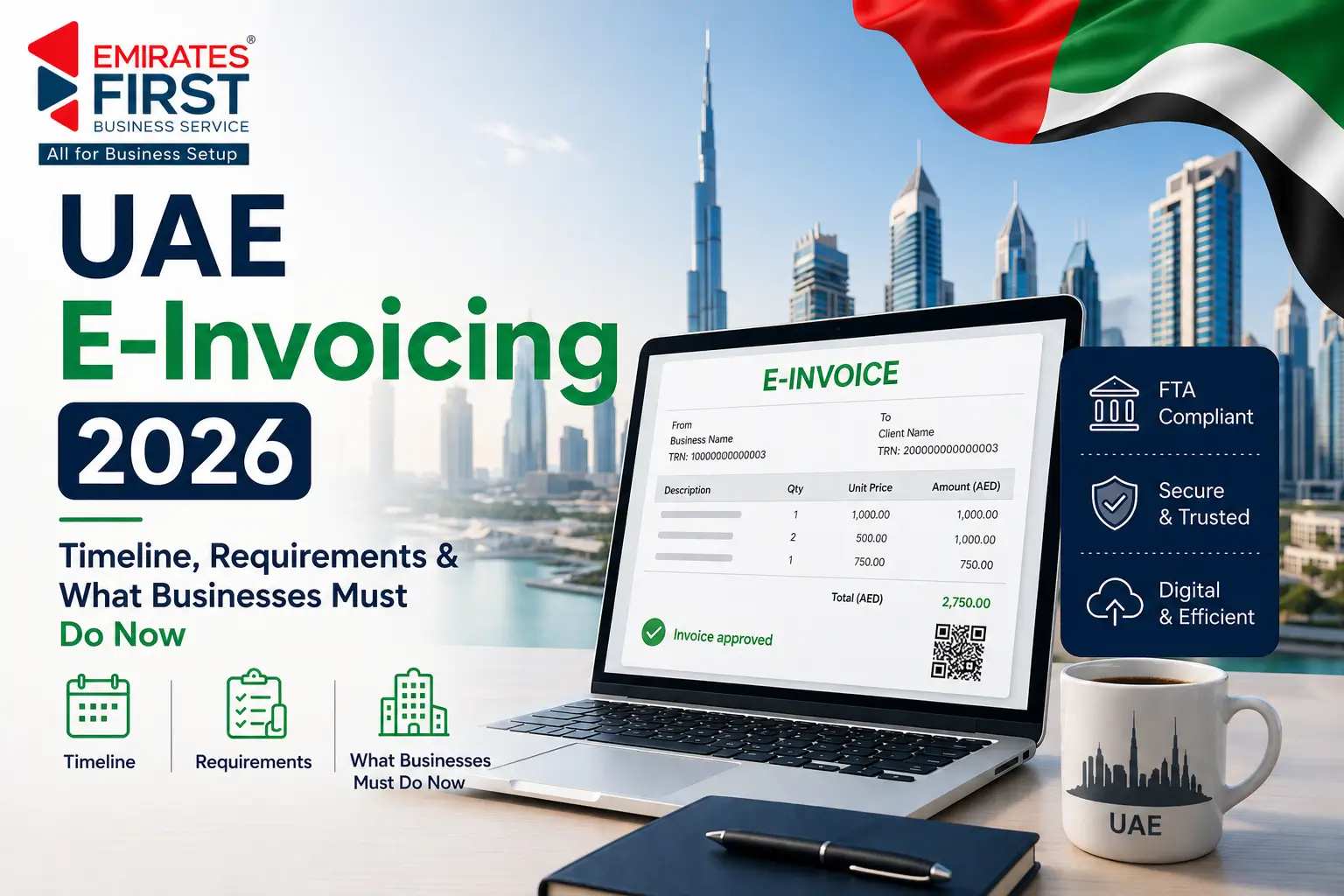
The UAE is steadily advancing toward a fully digital tax ecosystem, and one of the most significant developments in this journey is UAE E-Invoicing. With 2026 marked as a key implementation year, businesses across the region must prepare for a major shift in how invoices are generated, reported, and stored.
Whether you are an established company or exploring Business setup in UAE, understanding the upcoming e-invoicing framework is essential to ensure compliance and operational efficiency.
UAE E-Invoicing refers to the electronic generation, exchange, and reporting of invoices in a structured digital format. Unlike traditional PDF or paper invoices, e-invoices are created using standardized formats that allow seamless integration with government systems.
This initiative is being introduced by the UAE government to enhance transparency, reduce tax evasion, and streamline VAT reporting processes. UAE E-Invoicing will play a crucial role in strengthening the country’s digital economy and aligning with global tax practices.
The rollout of UAE E-Invoicing is expected to follow a phased approach:
During this stage, authorities are developing the framework, regulations, and technical infrastructure. Businesses are encouraged to start evaluating their current invoicing systems and identify gaps.
This is when UAE E-Invoicing will officially come into effect. Businesses will be required to issue invoices in a structured electronic format and ensure real-time or near real-time reporting to the Federal Tax Authority (FTA).
After the initial rollout, the system may expand to include more businesses, additional reporting requirements, and tighter compliance controls.
For companies planning how to start a business in UAE, it is important to factor in these requirements from the beginning to avoid costly system upgrades later.
To comply with UAE E-Invoicing, businesses must meet several technical and operational requirements:
Invoices must be generated in a machine-readable format such as XML or JSON, rather than simple PDFs.
Businesses may be required to submit invoice data to the tax authority either in real-time or within a specified timeframe.
Companies need accounting or ERP systems capable of integrating with government platforms for seamless data exchange.
Invoices must include all mandatory fields, such as VAT details, business identification, and transaction information.
Businesses are required to store e-invoices securely for audit and compliance purposes.
If you are applying for a Trade license in Dubai, ensuring your accounting systems are compatible with these requirements will be a critical step.
While compliance may seem challenging initially, UAE E-Invoicing offers several long-term advantages:
For businesses undergoing Dubai company registration, adopting e-invoicing early can provide a competitive advantage.
With 2026 approaching, businesses should not wait until the last minute. Here are the key steps to take now:
Review your existing invoicing and accounting processes. Identify whether your systems can support structured electronic invoicing.
Invest in ERP or accounting software that supports UAE E-Invoicing standards. Ensure it can integrate with government platforms.
Educate your finance and operations teams about the new requirements and workflows.
Consult with tax advisors or business setup consultants to ensure full compliance.
Budget for system upgrades, training, and potential consulting services.
Stay updated with announcements from the UAE authorities to ensure timely compliance.
Despite its benefits, UAE E-Invoicing may present some challenges:
However, businesses that prepare early can minimize these risks and transition smoothly.
The introduction of UAE E-Invoicing marks a major step toward a more transparent and efficient tax system. While the transition may require effort, it also opens doors to improved business processes and digital transformation.
For entrepreneurs considering Business setup in UAE or companies expanding their operations, aligning with UAE E-Invoicing requirements from the start will ensure long-term success and compliance.
By taking proactive steps today, businesses can not only meet regulatory expectations but also position themselves for growth in an increasingly digital economy.
As businesses prepare for the shift to digital compliance, choosing the right partner can make all the difference. With EFirst, you can simplify your transition to e-invoicing through reliable, secure, and fully compliant solutions tailored to your needs. Don’t wait until the deadline, start your e-invoicing journey with EFirst today and stay ahead with confidence.




© 2026 Emirates First Business Service LLC. All Rights reserved.


